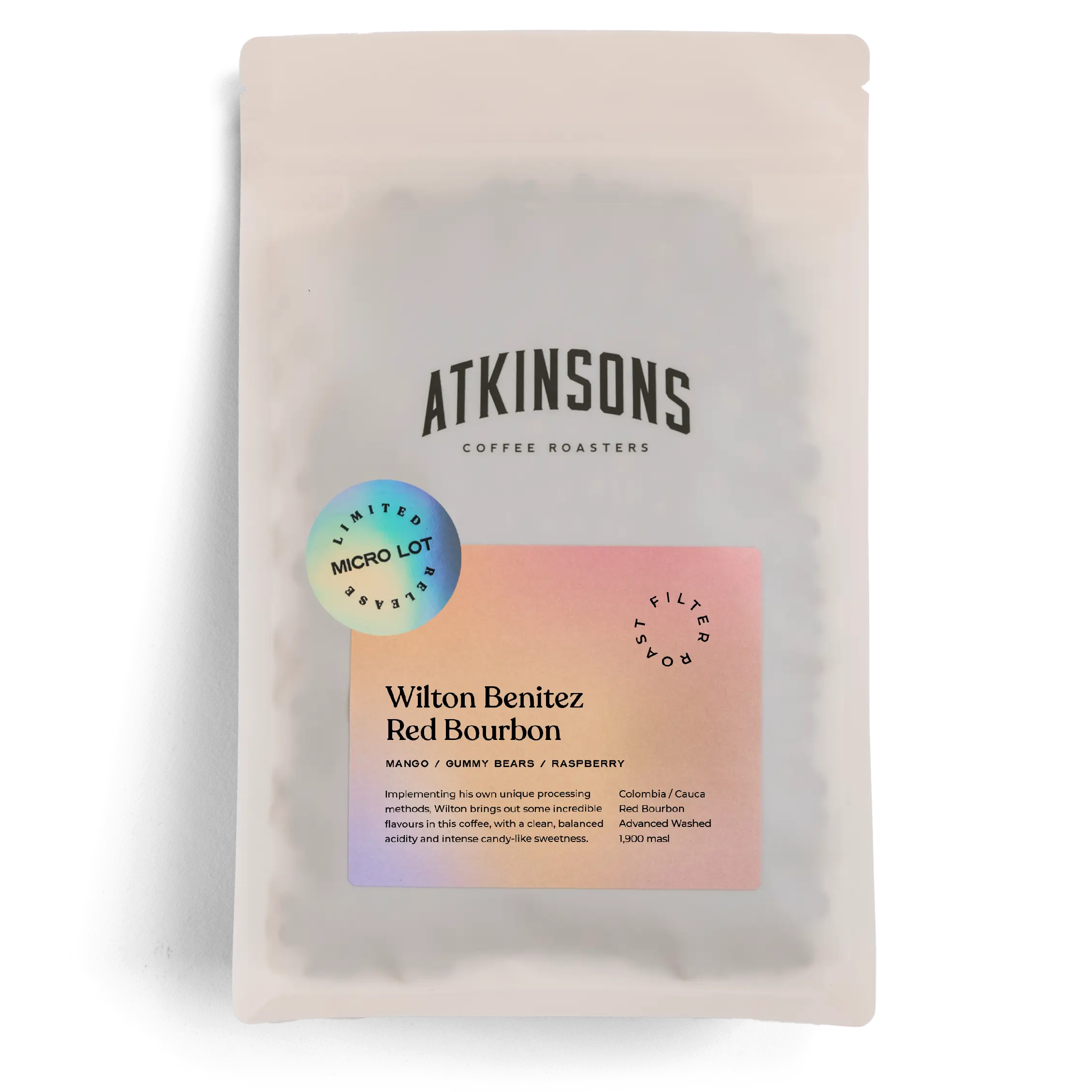
Bourbon traces back to coffee plants taken from Yemen to the island of Réunion, which was known as Île Bourbon in the 18th century, hence the name. Over time, Bourbon spread from Réunion to mainland Africa and then into Latin America in the 19th century. Red Bourbon refers specifically to the red-fruited form of Bourbon, distinguishing it from Yellow and Orange Bourbon mutations. Genetically, it belongs to the Arabica species, Coffea arabica, and remains closely related to Typica within the broader Bourbon-Typica genetic group. It has played a major role in breeding programs across Central and South America and is the parent of several important cultivars developed for improved yield and disease resistance.
As for the process for this lot, Wilton has given us a break down of what he does, good job because I could not remember it all!
Manual harvest.
Characterisation of the cherry.
Classification of the cherry by density and size.
Sterilisation of the cherry (with UV and Ozone).
Immersion of the cherries in water at 70oC for 30 seconds.
Cherry pulping.
Fermentation begins in anaerobic bioreactors.
Sterilisation of the fruit with ozonated water.
During fermentation, addition of specific yeast (Saccharomyces Pastorianus) to enhance fruity notes.
6 hours after the start of the fermentation process, verification of PH and Brix of the mucilage (PH=6 & Brix=18).
Fermentation for 96 hours.
Verification of PH=3.8 and Brix=6.
Drying of the grain with controlled equipment for 46 hours at 38oC.
The coffee is left to mature for 15 days in airtight bags before being analysed.